
An international product is not a translated copy.
Language, labels, units, currency, proof and user expectations should feel native to the intended audience. The product must also reflect how business is actually conducted in that market.
What changes from one market to another
Natural writing, terminology, units and messages adapted to the audience.
Roles, catalogues, invoicing, documents, orders, statuses and dashboards aligned with local workflows.
Market-specific pages, proof, technical SEO and performance for the intended search audience.
Architecture prepared for market differences
- Data structures for currencies, markets, languages and distinct roles.
- Administration tools that do not require code changes for local content.
- APIs prepared for payments, email, exports and business integrations.
- Security, backups, performance and deployment planned from the first version.
International visibility without mixed signals
Each important market can receive a dedicated URL, natural content, self-referencing canonical and reciprocal hreflang. Internal links remain inside the selected language so visitors follow a coherent path.
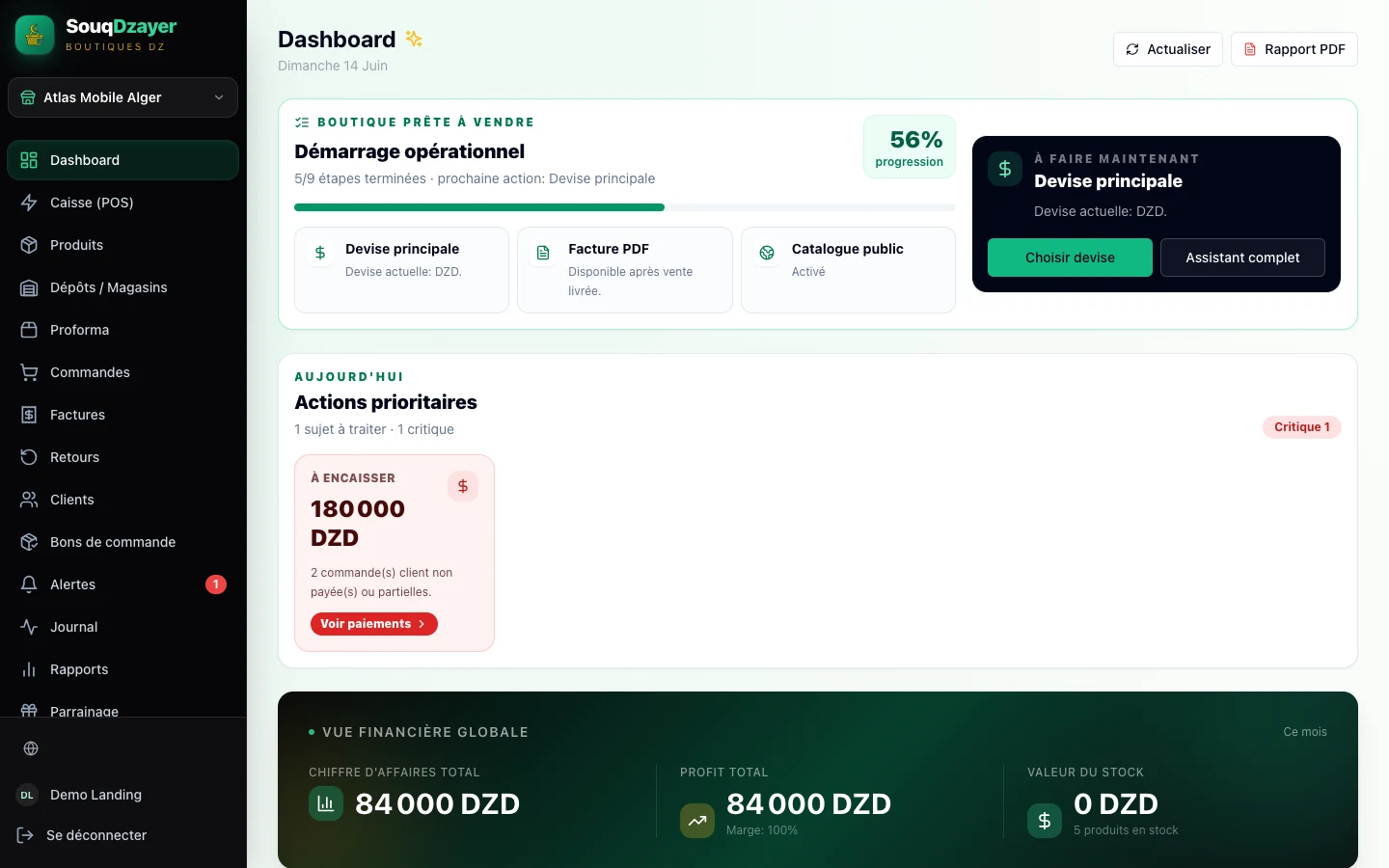
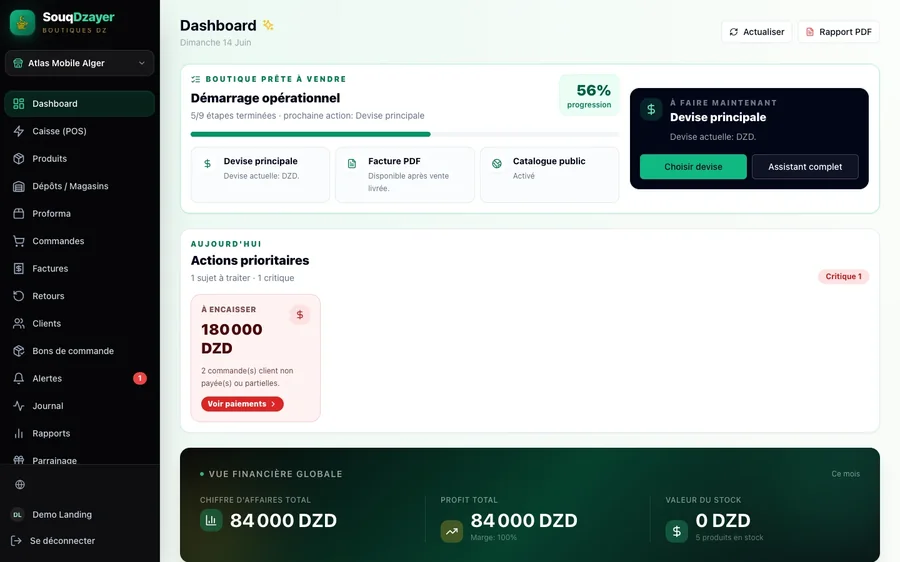
Real international proof: SouqDzayer
SouqDzayer adapts a B2B management platform to the Algerian market through its currency, labels, documents and daily business workflows.
Prepare the market before expanding the scope.
Frequently asked questions
It is a website, application or SaaS platform designed for a specific market, including its language, currency, workflows and business rules.
No. Workflows, content, proof, administration, search pages and sometimes payments also need to fit the intended market.
Yes, when the market and constraints are clearly scoped. The product must be designed around its real users.
Often, yes. Dedicated pages clarify the offer, proof, language and local differences for each important market.